After the 2008 financial crisis, financial regulations became stricter than ever before. Regulators demanded that financial institutions shape up and be prepared for regular audits. By 2013, they were hitting these institutions with a barrage of MRA’s (Matter Requiring Attention) and MRIA’s (Matter Requiring Immediate Attention) to ensure compliance. It was during this time that I entered the world of regulatory compliance, utilizing data governance solutions.
Metadata Management Example
I had the incredible opportunity to work with a major financial organization that was under the microscope of the MRIA. To tackle the challenge, they brought in a couple of System Integration partners who assembled a group of talented data analysts. These analysts worked tirelessly across all areas of the business, collecting crucial information such as metadata, data flows and tagging with risk ratings, data classification, authorized sources, and critical data elements.
Now, here’s where things got interesting. The team relied heavily on spreadsheets to organize and manage all this data. They created multiple versions, each tailored to different criteria. It was a complex web of information that needed to be connected and constantly updated. Frankly, it was a nightmare. The process was time-consuming and prone to errors, but it was a necessary starting point.

Metadata Management Evolves in 2018
The next generation began in 2018, as data catalogs emerged onto the scene, equipped with automated features and functionalities to help regulatory compliance. These catalogs not only automated the process of gathering metadata and data lineage to a certain extent, but also became instrumental in ensuring adherence to regulatory standards. The impact was profound, with a significant surge in the adoption of data catalogs by major players in the financial industry, including the prestigious Global Systemically Important Banks (G-SIBs).
While glossaries still required manual curation and importation, the involvement of stewards from various business functions became more active than ever. They diligently classified data, identified authorized sources, and assessed risks, among other crucial tasks. The awareness surrounding the importance of stewardship and ownership responsibilities also witnessed a remarkable increase. As a result, the role of Chief Data Officer (CDO) became prominent, reflecting the growing recognition of the significance of data management.
However, despite these advancements, challenges persisted in the realms of data quality and data lineage. Although there was notable improvement compared to previous years, a considerable amount of manual effort was still required to bridge the gap in these areas. Nonetheless, the industry was on an exciting trajectory, with data catalogs paving the way for a more streamlined and efficient future.
But that was just the second generation of solutions. We’ve come a long way since then. We’ve learned from the challenges and shortcomings of those early days.
Meet the Third Generation of Metadata Management
And now, we have reached the third generation! We now have advanced tools that can deeply and extensively catalog metadata. But that’s not all – these tools also utilize machine learning and artificial intelligence to enhance the metadata, reducing the workload on data stewards and subject matter experts. It’s like having a team of super-powered assistants at your disposal!
Orion Governance’s Enterprise Information Intelligence Graph (EIIG) represents this next generation of data catalog. With EIIG’s extraordinary capabilities, we are masters at uncovering hidden gems of information, enhancing data with valuable insights, revealing the intricate connections between fields, and presenting concise summaries of these connections.
Our notifications and reports on changes are second to none, providing you with a comprehensive understanding of your data landscape. Our catalog stands head and shoulders above the rest, leaving competitors in the dust. Bid farewell to tedious manual tasks and the need for subject matter experts.
Our powerful tools take care of the heavy lifting, liberating your time and energy to focus on what truly matters – ensuring compliance and making confident, data-driven decisions. We are dedicated to transforming your compliance journey into a seamless and highly efficient experience like never before!
Ready to learn more about EIIG? Schedule a demo today.
About the Author: Ram Pratti is the Chief Evangelist at Orion Governance, Inc. Connect with Ram on LinkedIn.
recent posts
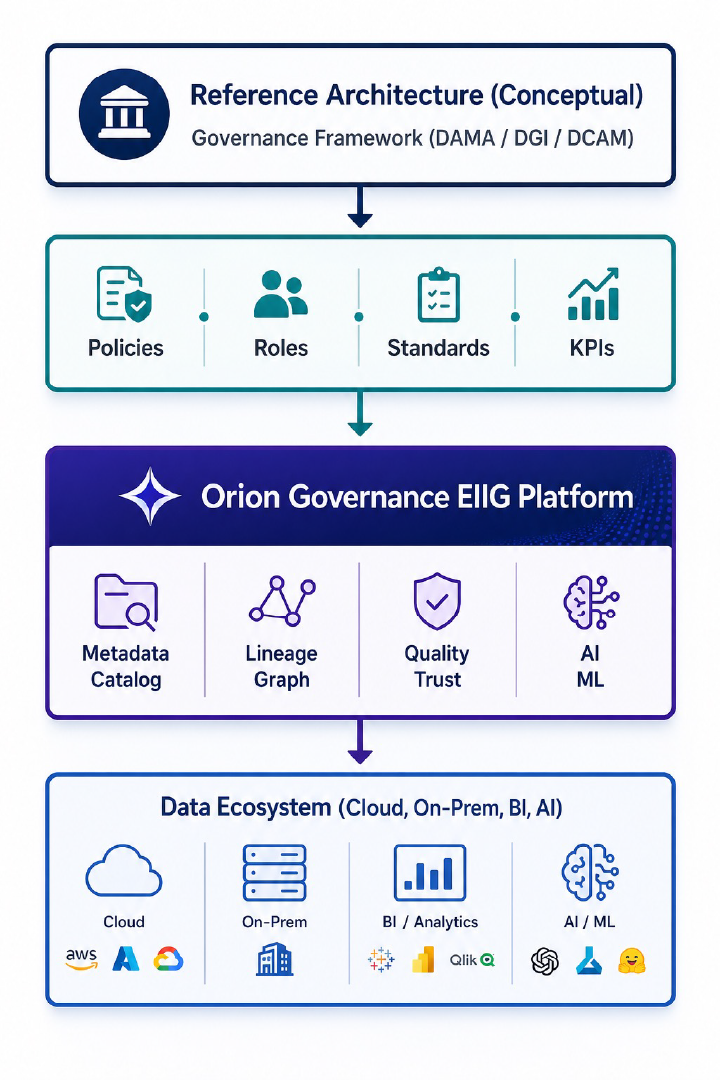
How to Leverage Orion Governance Enterprise Information Intelligence Graph to Implement Data Governance Framework
To use Orion Governance Enterprise Information Intelligence Graph (EIIG) effectively, you shouldn’t treat it as “just a tool.” It [...]
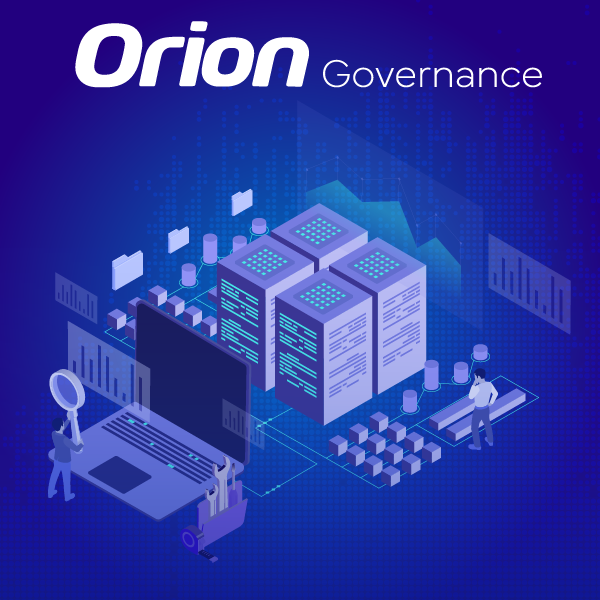
Orion Governance Enterprise Information Intelligence Graph Data Quality Baseline Report
A Data Quality (DQ) Baseline Report acts as the "health check" of your data before any remediation begins. In [...]

From Data Lineage to Enterprise Intelligence Fabric
Orion Governance’s Enterprise Information Intelligence Graph (EIIG) offers the definitive data lineage solution: automated, comprehensive, granular, multi-layered, and collaborative. [...]
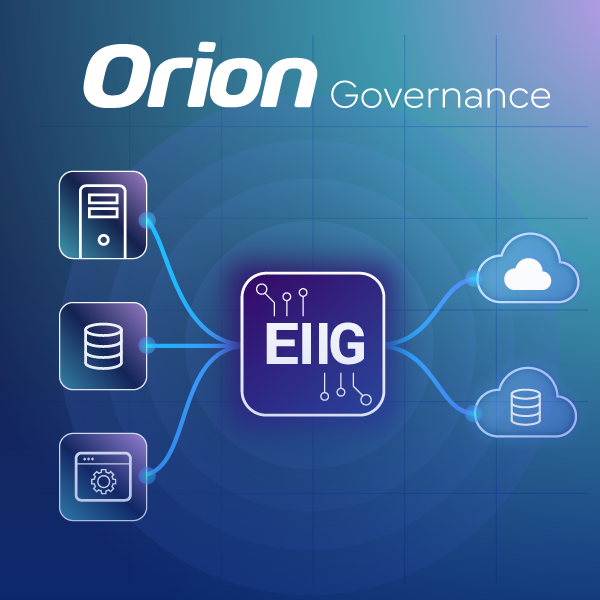
The Benefits of Using Orion Enterprise Information Intelligence Graph to Accelerate Cloud Migration/ Modernization
Cloud migrations are often framed as a technical exercise — move systems, modernize platforms, decommission legacy tools. But the [...]
Is Duplicate Data Silently Draining Your IT Budget?
Data redundancy isn't just a storage issue—it's a governance, risk, and cost challenge. At Orion Governance, the Enterprise Information [...]
How Orion Governance’s Enterprise Information Intelligence Graph (EIIG) Helps Banks to Meet BCBS 239 Requirements
Orion Governance’s EIIG can help banks meet all 11 BCBS 239 principles that apply to governance/infrastructure, risk data aggregation, [...]